
Piercing Aftercare in Vietnam: Best Practices to Heal Faster
June 17, 2026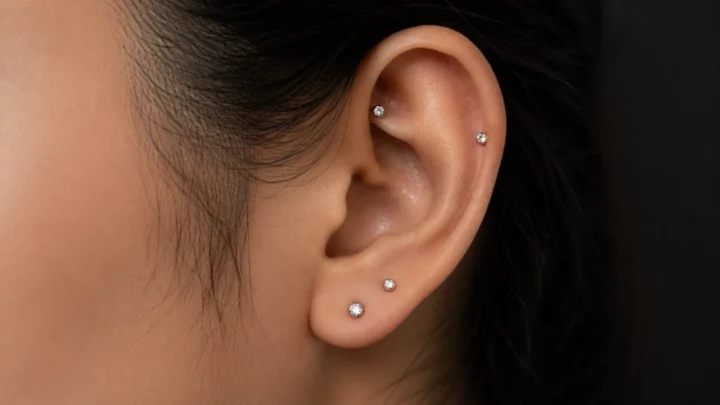
Planning a curated ear stack in Ho Chi Minh City is one of the most satisfying things you can do while travelling in Vietnam — and one of the most commonly misunderstood. It isn’t about collecting as many piercings as possible as fast as possible. It’s about placement, proportion, and patience. A genuinely well-built curated ear stack takes months or years to develop, and the decisions you make at the beginning determine how every addition after it fits.
At Bánh Mì Piercing in District 1, curated ear stack consultation is one of our most common appointments — tourists who arrive with one or two piercings and want to use their time in Saigon to plan the next chapter of their ear. This guide covers everything: how to think about placement, which order to do piercings in, how jewellery choices shape the final look, and how to plan a curated ear stack Ho Chi Minh City visitors can actually execute across a single trip or over multiple visits.
Table of Contents
- What Is a Curated Ear Stack — and Why Does Planning Matter?
- Placement Strategy: How to Map Your Ear
- Sequencing: Which Order to Get Your Piercings
- Jewellery Choices That Make or Break the Look
- Managing Healing Overlap
- Why Anatomy Determines Everything
- Frequently Asked Questions
- Start Your Curated Ear Stack in Ho Chi Minh City
What Is a Curated Ear Stack — and Why Does Planning Matter?
Ear curation is the practice of building multiple piercings across the ear with intention — treating the ear as a canvas where placement, spacing, jewellery size, and the order of additions all work together toward a coherent visual result. The term has become widely used in the last several years, but the concept is simply this: instead of getting piercings whenever the mood strikes and hoping they work together, you plan the full picture from the beginning and add to it over time.
The reason planning matters comes down to two things: spacing and healing overlap. A piercing placed even a few millimetres off from where it should be can close off options for future additions — or create a visual imbalance that becomes more obvious as more pieces are added. And two cartilage piercings done at the same time compete for healing resources, extending both timelines and increasing the risk of complications for each.
A curated ear stack built with a plan heals better, looks more intentional, and gives you more to work with long-term than the same number of piercings collected without one.
Placement Strategy: How to Map Your Ear
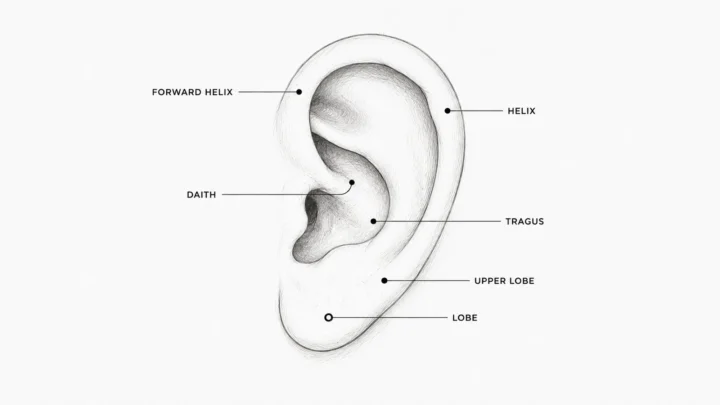
Before deciding which piercings to get, it helps to think about the ear in zones — and how those zones interact visually when multiple pieces are in play.
The Lobe Zone: Your Foundation
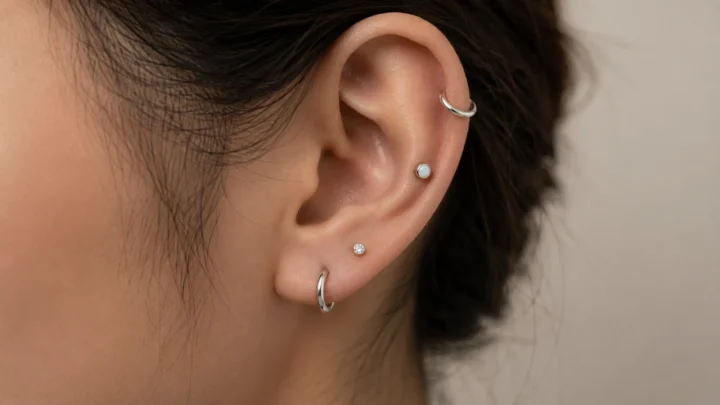
The lobe is the most accessible and fastest-healing part of the ear, which makes it the natural foundation of any curated stack. Most people start with a standard lobe, then add an upper lobe, and sometimes a third lobe above that. Each lobe piercing should be spaced deliberately — not too close together (which creates a crowded look and makes jewellery changes difficult) and not too far apart (which breaks the visual flow).
As a general guide: space lobe piercings approximately 6 to 8 millimetres apart vertically. This leaves enough room for different jewellery sizes — a hoop in the lobe and a stud in the upper lobe, for example — without the pieces touching or competing for visual space.
The Helix Zone: The Frame
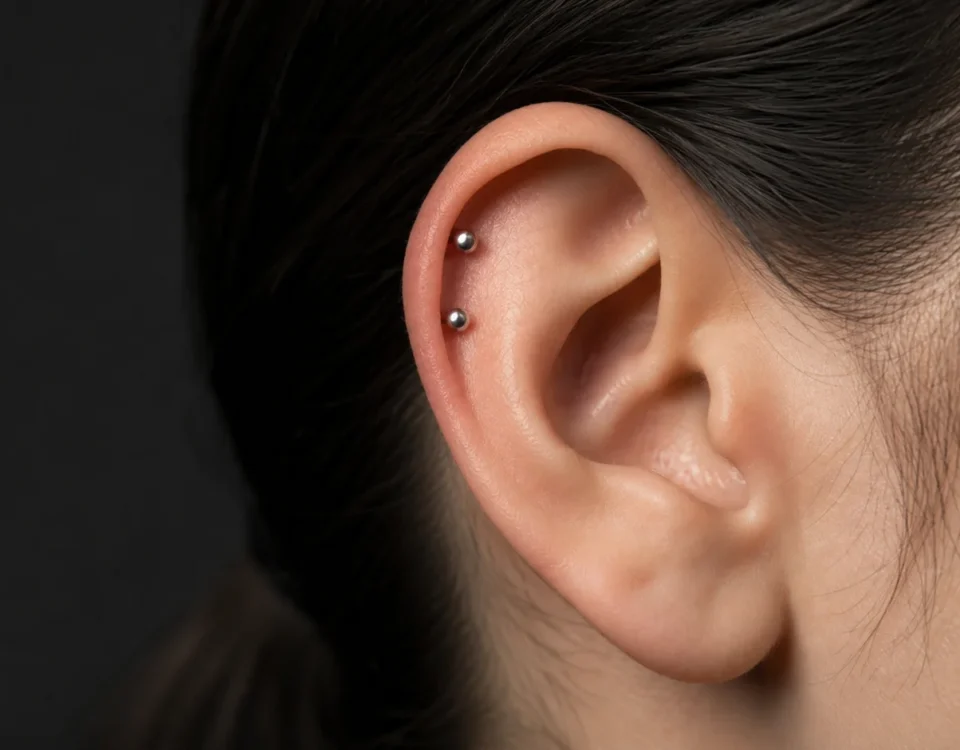
The helix — the outer cartilage rim running along the upper ear — acts as the frame of the curated stack. A single helix stud or hoop draws the eye upward and gives the ear a defined upper boundary. A double helix creates more structure along that rim. A forward helix adds a distinct front-facing element that works differently from any other placement.
When planning helix placement in relation to lobe piercings, think about the visual line from bottom to top. The stack reads most naturally when there is a clear progression — lobes at the base, cartilage in the mid and upper ear — rather than clustering everything in one area and leaving gaps elsewhere.
The Inner Ear Zone: The Detail
The inner ear — daith, tragus, rook, conch — adds depth and interest that is visible only at closer range. These placements work well as the final layer of a curated stack rather than the starting point, because they are more anatomy-dependent, have longer healing timelines, and require the surrounding piercings to already be in place for the full composition to make visual sense.
A daith sits in the innermost fold of cartilage above the ear canal. A tragus passes through the small projection in front of the ear canal. A rook pierces the inner ridge of cartilage. None of these are universal — anatomy determines whether each is feasible on your specific ear, and this is assessed at consultation before any booking is made.
Sequencing: Which Order to Get Your Piercings
The order in which you build a curated ear stack matters — both for healing management and for visual logic. Here is the approach we recommend at Bánh Mì Piercing for clients building from scratch.
Step 1: Establish the Lobe Foundation First
If you don’t already have lobe piercings, start here. The lobe heals in 6 to 10 weeks, which means you can have a healed foundation in place before you add cartilage. Getting the lobe position right from the start is important — a lobe piercing placed too high or too low affects how all subsequent piercings relate to it visually.
If you want a double lobe, do both at the same appointment. They are the same tissue type with the same healing timeline, and doing them together rather than sequentially saves time without meaningfully increasing healing complexity.
Step 2: Add Cartilage One Placement at a Time
Once lobe piercings are healed — or if you already have healed lobes — the next step is cartilage. The recommendation here is firm: one cartilage piercing at a time. Cartilage takes 6 to 12 months to heal, and two cartilage piercings healing simultaneously compete for blood flow and immune response in the same area. The result is typically that both heal slower and with more complications than either would have healed alone.
The practical approach: choose your first cartilage placement, let it reach the 3 to 4 month mark (when initial healing is well established) before adding the next, and plan the sequence so that each new placement makes sense in relation to what’s already there.
A Practical Sequence Example
A common curated ear build that works well visually and manageably from a healing perspective:
- Standard lobe + upper lobe — done together, healed in 6–10 weeks
- Helix — added once lobes are healed, 3–4 months into healing before next addition
- Forward helix — added while helix is mid-heal, creating healing overlap without overloading
- Daith or tragus — added after helix is fully healed, typically 9–12 months from the helix piercing date
This sequence produces a full, balanced curated stack over roughly 18 to 24 months — which sounds long but produces a result that has been built with intention at every stage.
Jewellery Choices That Make or Break the Look
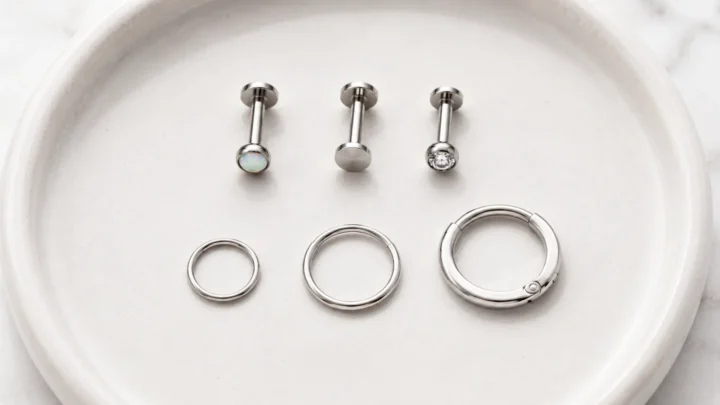
The difference between a curated ear stack that looks considered and one that looks like a collection of random piercings almost always comes down to jewellery decisions. Three factors shape this: metal tone consistency, size variation, and the stud-to-hoop balance.
Stick to One Metal Tone
Mixing gold and silver jewellery in the same ear is a style choice that can work — but it requires a clear eye and usually more experience with the look than most people starting a curated stack have. For the vast majority of people building a stack for the first time, choosing one metal tone and sticking to it produces a more coherent result.
At Bánh Mì Piercing, our starting jewellery is implant-grade titanium in a silver tone. This is intentional — silver is the more versatile base for a curated stack, reads well at all distances, and pairs cleanly with the widest range of clothing and skin tones. Once all piercings are healed, jewellery upgrades can be coordinated across placements for a fully unified look.
Work With Size Variation Intentionally
A curated ear stack reads most naturally when jewellery sizes decrease as you move up the ear. Larger pieces in the lobe — where there is more visual weight to work with — and progressively smaller studs in the helix and cartilage create a proportional taper that feels balanced rather than crowded.
A common mistake is using the same size stud in every placement. It creates a uniform pattern that draws attention to the uniformity rather than the composition. Mix a 3mm stud in the lobe with a 2mm stud in the upper lobe and a 1.5mm stud in the helix, and the eye travels across the ear naturally rather than reading each piercing as a separate item.
Studs First, Hoops After Healing
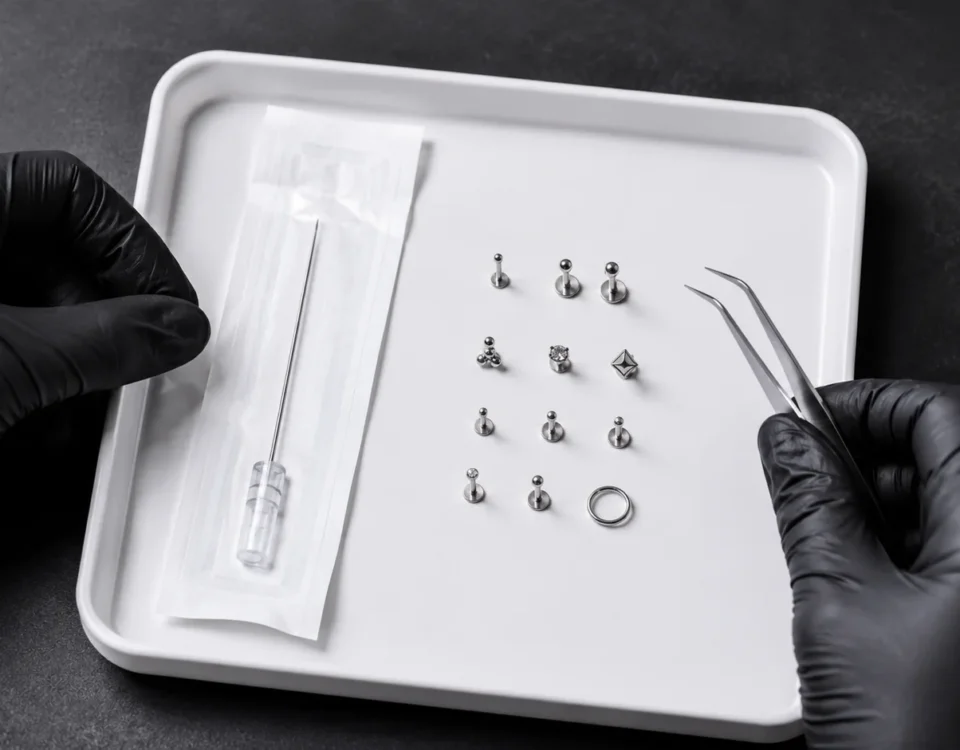
Flat-back labret studs are the correct jewellery for fresh piercings — in any placement, at any stage. Hoops and rings move more than studs, which creates friction against the healing fistula and significantly increases the risk of irritation bumps and prolonged healing. Hoops are finishing jewellery, not starting jewellery.
Once a piercing is fully healed, a small seamless hoop or clicker ring can transform its character entirely. A helix that spent its healing phase as a discreet stud becomes a statement piece with a 6mm seamless ring. A lobe hoop in a slightly larger diameter reads differently from any stud you could put in the same placement. The transition from starter stud to healed hoop is one of the most satisfying moments in building a curated stack — and one that’s worth waiting for.
Managing Healing Overlap
A curated ear stack almost always involves having multiple piercings at different stages of healing simultaneously. Managing this well is what separates a smooth build from a frustrating one.
What Healing Overlap Means Practically
When you have a helix at month four and you add a forward helix, you are managing two cartilage piercings with different cleaning needs, different sensitivities to pressure, and different timelines to full healing. The aftercare routine stays the same — sterile saline, once or twice daily, leave everything alone — but the logistics of sleeping, headphone use, and hair management need to account for both simultaneously.
The most important rule for healing overlap: never add a new piercing to an ear that is currently experiencing an active complication — an irritation bump, signs of infection, or a placement that hasn’t settled. Resolve whatever is happening with the existing piercing first, then add the next. Two stable piercings healing simultaneously is manageable. One stable and one troubled is a recipe for both becoming troubled.
The Timing Consideration for Travellers in Vietnam
A significant number of clients building a curated ear stack at Bánh Mì Piercing are tourists or short-term expats who want to make the most of their time in Ho Chi Minh City. For travellers, the realistic approach is to get one or two piercings at the beginning of the Vietnam trip — enough for the initial healing to establish before departure — and plan subsequent additions for the next visit or at a reputable studio at home.
If you’re in Saigon for two to four weeks, a lobe and an upper lobe done at the same appointment gives you a healed-or-near-healed foundation by the time you leave. Adding a helix on the same trip is reasonable if you have enough time remaining for the initial tenderness to settle. Adding anything beyond that in a short window creates more healing overlap than is comfortable to manage while also travelling.
Our piercing aftercare guide for Vietnam covers exactly what to do with a healing piercing while continuing to travel around the country.
Why Anatomy Determines Everything
The most important thing a curated ear consultation at Bánh Mì Piercing includes is an anatomy check — and it is the step that separates a plan that will work from one that looks good on paper but isn’t feasible on your specific ear.
Not Every Ear Can Do Everything
Ear anatomy varies significantly between individuals. The depth of the conch, the size of the tragus, the fold of the daith, the thickness of the helix cartilage — all of these affect which placements are possible, where they need to sit, and which jewellery sizes will work. A daith that looks perfect on a reference photo may not be achievable on your ear if the innermost fold doesn’t have enough depth. A forward helix may need to sit slightly differently from the reference to account for the angle of your upper cartilage.
None of this means the look you want is impossible. It means the specific execution needs to be adapted to your anatomy — and that adaptation is what the consultation is for. A piercer who agrees to any placement without looking at your ear first is not doing their job. According to the Association of Professional Piercers, anatomy assessment before cartilage and inner ear placements is a foundational standard of professional practice precisely because placement feasibility varies so significantly between individuals.
Bring Reference Photos — But Hold Them Loosely
Reference photos are genuinely useful for a curation consultation. They communicate the aesthetic direction you’re moving toward — how dense the stack should be, whether you prefer hoops or studs, how far up the ear you want to go, the overall mood of the finished look. Bring them and share them freely.
What reference photos cannot do is tell you whether the exact placements shown are possible on your ear. The piercer’s job is to look at what you’ve brought, look at your ear, and translate your reference into what is achievable, appropriately spaced, and positioned for long-term success on your specific anatomy. The best curated ears are not copies of someone else’s — they are versions of a direction, adapted to the person wearing them.
Frequently Asked Questions About Curated Ear Stacks in Ho Chi Minh City
How many piercings can I get in one session to start a curated ear stack?
For lobes: both lobes in a single session is reasonable and common. For cartilage: we recommend a maximum of one cartilage piercing per session, or one cartilage alongside lobe work. Multiple cartilage piercings in one session significantly increases healing complexity and extends the timeline for both. The curated ear is built over time — the session is the beginning, not the whole project.
How long does it take to build a full curated ear stack?
A complete curated ear — lobes, upper lobe, helix, and one or two inner ear placements — typically takes 18 to 24 months to build from scratch when done with appropriate sequencing. This accounts for letting each piercing reach a stable healing stage before adding the next. The result is a stack where every placement is fully healed and ready for the jewellery it was designed to wear.
Can I get a curated ear consultation at Bánh Mì Piercing without booking a piercing?
Yes. Walk in, show us your ear, share your reference photos, and we’ll talk through what’s possible, what order makes sense, and what to realistically expect from the build. There is no obligation to book a piercing on the same visit. Many clients come in for a consultation, take the plan away, and come back when they’re ready to start.
What jewellery should I wear for a curated ear stack consultation?
Wear whatever you currently have in your existing piercings. The consultation works with what’s there and plans around it. If you’ve been wearing fashion jewellery in healed piercings, we may suggest switching to implant-grade pieces before adding new piercings to create a consistent base — but that’s a conversation we’ll have in the room, not a requirement before you arrive.
Can I mix gold and silver in a curated ear stack?
It can work, but it requires intention and is harder to execute well than a single-tone stack. If you’re building from scratch, we recommend choosing one metal tone — usually silver — and staying consistent throughout the build. Once everything is healed and you have a clear picture of the finished look, you can make informed decisions about whether mixing tones adds to it or distracts from it.
Do you offer jewellery upgrades for healed piercings at Bánh Mì Piercing?
Yes. Once any piercing is fully healed, we can help you select and fit upgraded jewellery — different stud tops, seamless hoops, clicker rings — to evolve the look of each placement. Jewellery upgrades are one of the most satisfying parts of building a curated stack and something we’re happy to assist with even if the original piercing wasn’t done at our studio.
Start Your Curated Ear Stack in Ho Chi Minh City
A curated ear stack in Ho Chi Minh City is one of the best things you can start while travelling in Vietnam — and one of the most rewarding long-term projects in personal style. The key is beginning with a plan: knowing where each piercing is going before the first needle, understanding the sequencing, choosing jewellery that works together, and giving each placement the healing time it actually needs.
At Bánh Mì Piercing, we approach every curated ear as a design brief. We look at what you have, what you want, and what your anatomy makes possible — then we help you build a roadmap that gets you there without compromises that will become problems later.
Consultations are free. Walk-ins are welcome Monday to Sunday, 10:00–20:00. Third floor, 36 Lê Lợi, District 1 — 2 minutes from Bến Thành Market.
Ready to start? Book your consultation or first session here, or message us on WhatsApp at +84 868 93 97 51 with a photo of your ear and the reference images you’ve been saving. We’ll take it from there.
Before your first appointment: read our first-time piercing guide for Saigon if you’re new to piercing, or our complete ear piercing guide for Ho Chi Minh City for a full breakdown of every placement and what each one involves.