Helix Piercing Ho Chi Minh City: 5 Things to Know
June 17, 2026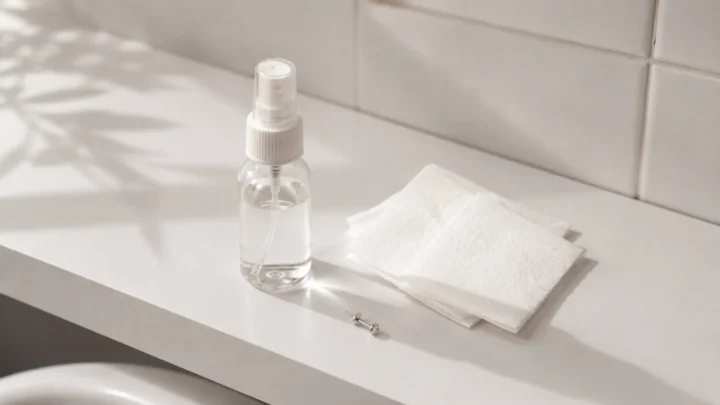
Piercing aftercare in Vietnam is simpler than most people expect — and more important than most people realise. Whether you just got pierced at a studio in District 1 or you’re arriving in Ho Chi Minh City with a healing piercing from home, the routine that determines how well your piercing heals is the same. Two minutes, twice a day, for as long as the healing takes.
This is the exact aftercare guidance we give every client at Bánh Mì Piercing. Everything here reflects current professional piercing standards — not folklore, not social media advice, and not the instructions that came with a gun piercing kit in 2005.
Table of Contents
- The Core Aftercare Routine: What to Do
- Finding Saline Solution in Vietnam
- Healing Timelines by Placement
- What Normal Healing Looks Like
- Things to Avoid During Piercing Aftercare in Vietnam
- Aftercare Adjustments for HCMC’s Climate
- Infection vs Irritation: How to Tell the Difference
- Frequently Asked Questions
- Keep Your Piercing on Track
The Core Aftercare Routine: What to Do
The entire piercing aftercare routine in Vietnam — or anywhere — comes down to three actions: clean with saline, rinse with clean water, dry thoroughly. That’s it. The simplicity is the point. Piercings heal through a natural biological process that your body manages without much help. Your job is to keep the area clean and stop interfering.
Step-by-Step Cleaning Process
Clean the piercing once or twice a day. More frequent cleaning does not speed up healing — it can actually slow it down by not giving the tissue time to settle between cleanings. Here’s the sequence:
- Wash your hands with soap and water before touching the piercing or the area around it. Every time, without exception.
- Spray sterile saline directly onto the piercing — front and back if accessible. Let it sit for 30 to 60 seconds to loosen any crust that has formed around the jewellery.
- Rinse with clean water. Tap water in Ho Chi Minh City is not reliably safe to drink, but it is generally acceptable for rinsing a piercing. If you have access to filtered or bottled water, use that instead, particularly in the first few weeks.
- Pat dry with a clean disposable paper tissue — not a cloth towel, not cotton wool. Cloth towels harbour bacteria and cotton wool leaves fibres behind. Paper tissue is single-use and leaves nothing.
- Leave it alone until the next cleaning. Do not apply anything else, do not adjust the jewellery, do not check it again until tomorrow.
A Note on Crusties
The whitish or slightly yellow crust that forms around a healing piercing is lymph fluid — a normal part of the healing process. It is not pus, it is not infection, and it does not need aggressive removal. The saline soak softens it and the rinse removes it naturally. Do not pick at it or scrape it off dry. Doing so irritates the tissue and can introduce bacteria from your fingers.
Finding Saline Solution in Vietnam
Sterile saline is widely available across Ho Chi Minh City and Vietnam more broadly. You do not need to bring it from home or hunt for it in international pharmacies. Here’s where to find it and what to look for.
Vietnamese Pharmacies (Nhà Thuốc)
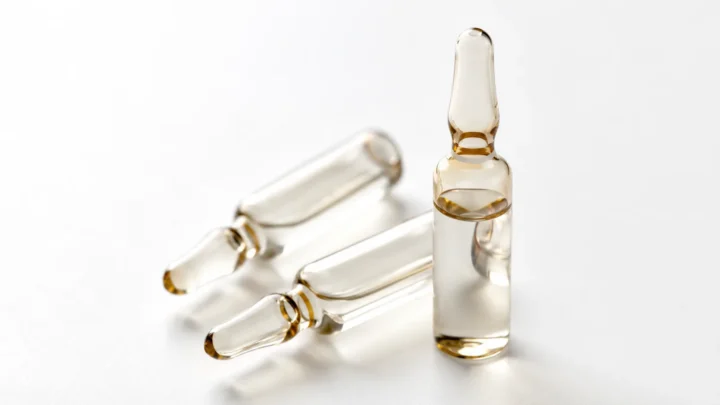
The product you want is called “nước muối sinh lý” — literally “physiological saline water” — which is sodium chloride 0.9% solution. It is sold at virtually every Vietnamese pharmacy, typically in two formats: small single-use ampoules (5ml or 10ml) and larger spray bottles (100ml or 250ml).
For piercing aftercare, the spray bottle format is the most practical. Look for brands like Natri Clorid 0.9% or any product labelled as “dung dịch muối sinh lý.” A bottle costs between 15,000 and 40,000 VND depending on size and brand — widely available in any neighbourhood pharmacy without a prescription.
Wound Wash Spray
If you prefer something closer to what professional piercers recommend internationally, look for a sterile wound wash spray — pressurised cans of 0.9% saline with no additives. These are available at larger pharmacies in District 1 and at some international health stores in HCMC. They’re slightly more expensive but dispense a fine sterile mist rather than a stream, which is gentler on healing tissue.
Either format works. The active ingredient — 0.9% sodium chloride — is identical. What matters is that there are no additives, fragrances, or antiseptic agents mixed in. Plain saline only.
Healing Timelines by Placement
One of the most important things to understand about piercing aftercare in Vietnam — or anywhere — is that different placements heal at very different rates. The timeline below reflects full internal healing, not just surface comfort. A piercing can feel fine weeks or months before the fistula is complete.
| Placement | Minimum Healing Time | Full Healing Range |
|---|---|---|
| Lobe | 6 weeks | 6–10 weeks |
| Upper Lobe | 6 weeks | 8–12 weeks |
| Helix | 3 months | 6–12 months |
| Forward Helix | 3 months | 6–12 months |
| Daith | 3 months | 6–12 months |
| Tragus | 3 months | 6–12 months |
| Industrial | 6 months | 12–18 months |
These ranges assume consistent aftercare and no significant disruption to the healing process. Factors that extend healing include: sleeping on the piercing, changing jewellery early, using harsh cleaning products, illness, stress, and poor nutrition. Factors that support healing: good diet, adequate sleep, consistent saline cleaning, and simply leaving the piercing alone.
The Downsizing Appointment
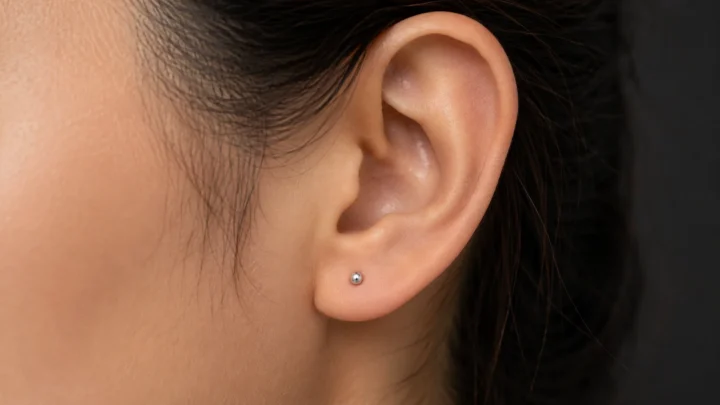
For all cartilage piercings and many lobe piercings, a downsizing appointment is needed 4 to 8 weeks after the initial piercing. Starting jewellery is fitted longer to accommodate early swelling. Once that swelling settles, the longer post needs to be replaced with a shorter one that sits flush against the tissue.
Skipping this step is one of the most consistent causes of prolonged healing and irritation. A long post that’s no longer needed catches on hair, clothing, and bedding repeatedly — each snag a small disruption to the healing fistula. Come back to the studio for this. At Bánh Mì Piercing, downsizing appointments are free for clients who got pierced with us.
What Normal Healing Looks Like
Understanding what’s normal during piercing healing in Vietnam removes a significant amount of anxiety. Most of what people worry about — and message us about at midnight — is completely standard biology.
Signs That Your Piercing Is Healing Normally
Week 1–2: Tenderness, redness, and minor swelling around the piercing site are expected and normal. The area may feel warm to the touch. White or pale yellow crust forming around the jewellery is lymph fluid — part of the body’s healing process, not a sign of infection.
Week 3–6 (lobe) / Month 2–4 (cartilage): Tenderness reduces. The piercing looks calmer. Crust formation slows but may not stop completely. The jewellery may begin to feel more settled in position. This is the phase where most people assume healing is finished — it is not, particularly for cartilage.
Later stages: The piercing feels comfortable in all normal daily activities. Crust is minimal or absent. The skin around the entry and exit points looks the same as the surrounding tissue. The jewellery moves freely without resistance or discomfort. This is full healing.
The Test for Full Healing
A fully healed piercing shows no tenderness when the jewellery is moved gently, no crust formation after several consecutive days of cleaning, and no visual redness or raised tissue around the entry and exit points. All three conditions must be met — not just one or two. If you are unsure, bring it to the studio and a piercer will check it for you in under five minutes.
Things to Avoid During Piercing Aftercare in Vietnam
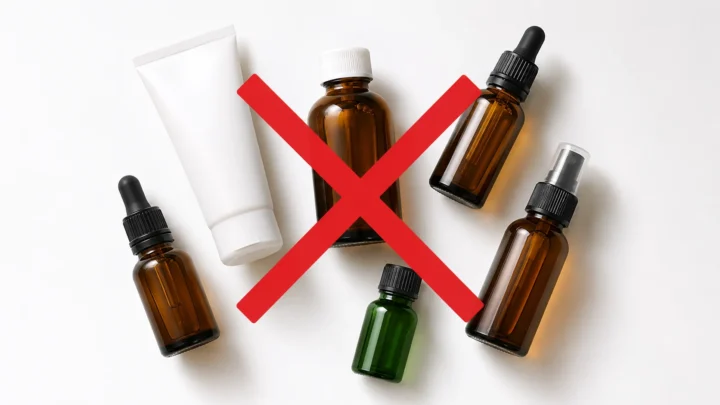
The list of things not to do during piercing aftercare is arguably more important than the list of things to do. Most healing complications stem not from insufficient cleaning but from well-intentioned actions that interfere with the process.
Products to Avoid Completely
Alcohol and hydrogen peroxide are the most common home remedies people apply to healing piercings. Both are too harsh for open healing tissue — they kill the forming cells along with any bacteria, actively slowing the healing process. They sting because they are damaging the tissue, not because they are working.
Tea tree oil is widely recommended on social media and is directly associated with contact dermatitis and delayed healing in piercing tissue. It is not appropriate for open wounds regardless of how diluted it is. Do not use it on a healing piercing under any circumstances.
Betadine (povidone-iodine) is a standard antiseptic in Vietnamese pharmacies and clinics. It is not appropriate for piercing aftercare — it is too aggressive for the delicate tissue forming around new jewellery and can cause discolouration and irritation with repeated use.
Soap applied directly to the piercing — even gentle soap — can leave residue that irritates the healing fistula. If soap gets on the piercing during showering, rinse it thoroughly with clean water. It is not necessary to clean piercings with soap.
Coconut oil, vitamin E oil, and other emollients are sometimes recommended as natural alternatives. These are not appropriate for healing piercings — they can trap bacteria against the tissue and interfere with the natural drying process that supports fistula formation.
Behaviours to Avoid
Twisting or rotating the jewellery remains one of the most persistent myths in piercing aftercare. The advice to “turn the ring so it doesn’t stick” was standard guidance from gun piercing studios for decades and has caused significant harm to countless piercings. It disrupts the healing fistula every time it is done. Leave the jewellery completely still.
Touching the piercing with unwashed hands introduces bacteria directly to healing tissue. If you find yourself touching your piercing throughout the day without thinking about it, make a deliberate effort to stop. It is a habit that costs nothing to break and prevents a significant number of complications.
Swimming in pools or the ocean during early healing is not advisable. Pool water contains chlorine and bacteria; ocean water contains salt at concentrations and with contaminants that are not equivalent to sterile saline; both can introduce pathogens to an open wound. Wait until the piercing is at minimum surface-healed before swimming, and rinse thoroughly with clean water immediately afterward.
Changing jewellery before full healing — covered in detail in our helix piercing guide — is the single most common cause of late-stage complications in cartilage piercings. Wait for all three healing indicators to be met before changing anything.
According to the Association of Professional Piercers’ aftercare guidelines, the most important factors in successful piercing healing are consistent gentle cleaning with sterile saline and avoiding unnecessary interference — both of which are free and require no special products.
Aftercare Adjustments for HCMC’s Climate
Ho Chi Minh City’s tropical climate — hot, humid year-round, with a distinct wet season from May to November — creates a few specific considerations for piercing aftercare that differ from what clients may have experienced in cooler, drier countries.
Heat and Sweat
Sweating around a healing piercing is unavoidable in Saigon. Sweat itself is not harmful to a healing piercing, but sweat that sits against the tissue for extended periods — particularly under hair, behind jewellery, or in the fold of cartilage — creates a damp environment that slows healing and can encourage bacterial growth.
After exercise or significant time in the heat: rinse the piercing with clean water, pat dry with a disposable tissue, and allow it to air dry fully before covering it with hair or headwear. Do not add an extra saline cleaning on top of your usual routine — just rinse and dry.
Humidity and Air Conditioning
The constant movement between HCMC’s outdoor humidity and heavily air-conditioned interiors — hotels, restaurants, transport — can cause minor tissue fluctuation around fresh piercings. This is not a serious concern, but it does mean your piercing may feel slightly more or less sensitive depending on the environment. Staying consistent with your cleaning routine regardless of how the piercing feels on a given day is the most effective response.
Water Quality for Rinsing
Tap water in Ho Chi Minh City is treated but not reliably potable, and its bacterial content varies by district and season. For rinsing a healing piercing, particularly in the first 2 to 4 weeks, filtered or bottled water is preferable where accessible. After the initial healing phase, regular tap water for rinsing is generally acceptable. If you have any concerns, your piercer can advise based on the specific placement and how healing is progressing.
Travelling Around Vietnam With a Healing Piercing
If you got pierced in Ho Chi Minh City and are continuing to travel — to Da Nang, Hội An, Hà Nội, or further — bring enough saline to last your trip. The product is available in pharmacies across Vietnam under the same name (“nước muối sinh lý”), but access varies in smaller towns. Keep the piercing protected from dust during motorbike rides by covering with clean clothing or a scarf rather than an adhesive bandage, which traps moisture. The routine stays the same regardless of where you are: clean, rinse, dry, leave alone.
Infection vs Irritation: How to Tell the Difference
This distinction matters because the response to each is completely different. Treating an irritation bump as if it’s an infection — with antiseptics, aggressive cleaning, or antibiotics — makes irritation worse. Missing a genuine infection because you assumed it was normal healing is a different problem with more serious consequences.
Signs of Irritation (Common, Manageable)
An irritation bump is a small raised area — sometimes called a hypertrophic scar in mild form — that forms when the healing tissue is repeatedly disturbed. It appears at one or both entry/exit points of the piercing. It is typically flesh-coloured or slightly pink, firm to the touch, and not warm or spreading. It may have a small clear or pale fluid if pressed, but is not discharging actively.
The cause is almost always mechanical: sleeping on the piercing, a long post that hasn’t been downsized, hair catching repeatedly, or over-cleaning. Remove the source of irritation and continue with saline cleaning. Most irritation bumps resolve within 2 to 4 weeks once the cause is addressed.
Signs of Infection (Less Common, Requires Action)
A genuine piercing infection presents differently: spreading redness that extends beyond the immediate piercing site, heat and pain that increases rather than decreases after the first week, thick discharge that is green or yellow with a distinct odour, and sometimes fever or swollen lymph nodes in the surrounding area.
If you observe these signs, do not attempt to remove the jewellery yourself — an open infected wound without jewellery in place can close over the infection. See a doctor. Piercing infections are treatable with antibiotics and are rarely serious when addressed promptly, but they do require medical attention rather than home management.
When to Contact the Studio
If you are unsure which category you’re in, contact us. Send a photograph of the piercing via WhatsApp and describe what you’re experiencing. We can usually tell from a photo whether what you’re seeing is normal healing, irritation, or something that needs medical attention. This service is available to all Bánh Mì Piercing clients throughout their healing period — not just in the first few days.
Frequently Asked Questions About Piercing Aftercare in Vietnam
Where can I buy saline solution for piercings in Ho Chi Minh City?
Any Vietnamese pharmacy (nhà thuốc) stocks sterile saline under the name “nước muối sinh lý.” It’s 0.9% sodium chloride solution — the same product used in medical wound care. Available in spray bottles or single-use ampoules for 15,000 to 40,000 VND. No prescription needed.
Can I swim in the pool or ocean after getting a piercing in Vietnam?
Not during the early healing phase. Both pool water and ocean water introduce bacteria and contaminants to an open healing wound. Wait until the piercing is at minimum surface-healed — 6 to 10 weeks for a lobe, longer for cartilage — and rinse thoroughly with clean water immediately after any exposure to pool or ocean water.
Is the humidity in Vietnam bad for healing piercings?
Humidity itself does not prevent healing, but sweat accumulating around a healing piercing can slow it down. The adjustment is simple: rinse with clean water and dry thoroughly after sweating. Keep the cleaning routine consistent. Most piercings heal well in Vietnam’s climate with appropriate aftercare.
I got pierced somewhere else before arriving in Vietnam — can Bánh Mì Piercing help me with aftercare?
Yes. We’re happy to check healing piercings regardless of where they were done, advise on what we see, and help with downsizing or jewellery changes once healing is complete. Send us a photo on WhatsApp first if you’d like a preliminary assessment before coming in.
How do I know if my piercing is infected or just irritated?
Irritation: a raised bump at the piercing site, not spreading, not warm, typically caused by pressure or friction. Infection: spreading redness beyond the piercing site, increasing pain after the first week, thick coloured discharge with odour, possible fever. When in doubt, send us a photo and we’ll advise. If you suspect infection, see a doctor.
Can I use the saline spray I brought from home?
Yes, provided it is sterile 0.9% sodium chloride with no additives, fragrances, or preservatives. If your spray has additional ingredients listed, check with us before using it. Some wound sprays marketed for piercings in certain countries contain additives that are not recommended by professional piercing associations.
Keep Your Piercing on Track
Piercing aftercare in Vietnam comes down to the same principles as anywhere else, with a few small adjustments for the climate: sterile saline twice a day, clean water rinse, disposable tissue to dry, and everything else left strictly alone. The routine is simple. The discipline to follow it consistently — and to resist the temptation to do more — is where most people either succeed or struggle.
If you got pierced at Bánh Mì Piercing, you already have our number. Use it. Send a photo if something looks off, come back for your downsizing appointment, and let us know how it’s going. The piercing is done in a few seconds — the healing is a collaboration.
If you haven’t been pierced yet and this guide has answered your questions, we’d love to see you in the studio. Book your session here, or walk in any day between 10:00 and 20:00 at the third floor of 36 Lê Lợi, District 1.
Planning your first piercing? Read our guide to getting your first piercing in Saigon. Already pierced and want to know more about your specific placement? Our complete ear piercing guide for Ho Chi Minh City covers healing timelines and aftercare for every ear placement in one place.