Meaningful Tattoo Ideas Vietnam Travel: 15 Beautiful Designs
May 24, 2026
First Time Piercing in Saigon: Honest Studio Guide
June 16, 2026
Ear Piercing in Ho Chi Minh City: The Complete Studio Guide
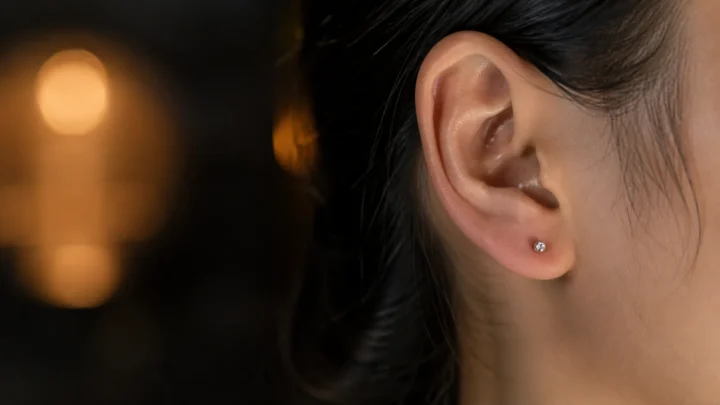
Planning to get an ear piercing in Ho Chi Minh City? Whether it’s your first lobe and you’re a little nervous, or you’re building out a curated ear stack one placement at a time, this guide covers everything you need to know — from choosing the right piercing type to finding a studio you can actually trust in Saigon.
We’ve put this together at Bánh Mì Piercing, a boutique piercing studio in District 1, where we carry out ear piercings every day for tourists, expats, and locals. Consider this your honest, practical starting point.
Table of Contents
- Types of Ear Piercings: What’s Available in HCMC
- Ear Piercing Prices in Ho Chi Minh City
- How to Choose a Safe Piercing Studio in Saigon
- What Happens During Your Ear Piercing Appointment
- Healing Times and Aftercare for Ear Piercings in Vietnam
- Frequently Asked Questions
- Ready to Book Your Ear Piercing in Ho Chi Minh City?
Types of Ear Piercings: What’s Available in HCMC
The most common question we hear is: which ear piercing should I get? The honest answer depends on your anatomy, your healing patience, and how you want the finished ear to look. Not every placement works the same way on every person — that’s exactly why a proper consultation matters before any needle comes near your ear.
Here’s a clear breakdown of what’s available and what each one actually involves.
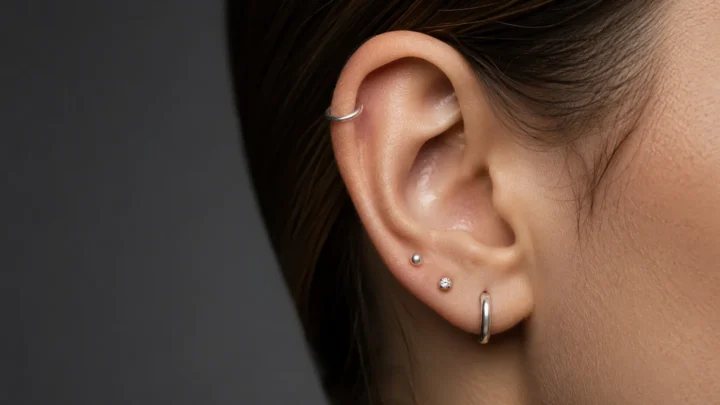
Lobe Piercing
The lobe is the softest tissue on the ear, which makes it the easiest placement to heal and the natural starting point for most people. A standard lobe piercing takes 6 to 10 weeks to heal with proper care. You can do a single lobe, a paired set, or plan for a second or third lobe to build a layered look over time.
At Bánh Mì Piercing, a basic lobe piercing starts at 200,000 VND. Upper lobe placements — slightly higher on the soft tissue — start at 250,000 VND and work beautifully as an add-on to a standard lobe setup.
Helix Piercing
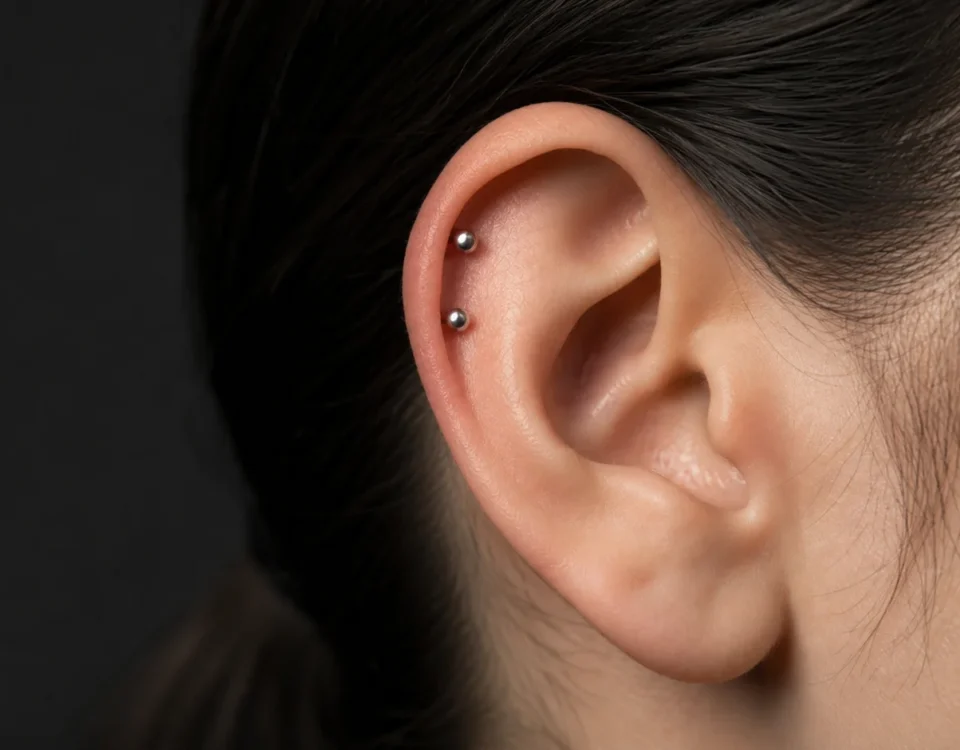
The helix runs along the outer upper cartilage of the ear. It’s one of the most popular placements in Saigon right now, and for good reason — it’s versatile, it looks clean with a small flat-back stud or a minimalist hoop, and it pairs naturally with lobe piercings without looking overdone.
Cartilage heals slower than soft tissue. A helix typically takes 6 to 12 months to heal fully, even when it feels fine much earlier. Patience here pays off. Trying to change jewellery too soon is one of the most common reasons people develop irritation bumps.
Forward Helix
The forward helix sits at the front of the ear, where the top of the ear meets the face. It’s a stronger visual statement than a standard helix, adding structure to the upper ear without taking up much space. Healing is similar to a standard helix — expect 6 to 12 months. Forward helix placements start at 450,000 VND.
Daith Piercing
The daith passes through the innermost fold of cartilage, right above the ear canal. It’s a sculptural, deep placement that looks striking in a curated ear layout. Because of the placement, it requires a careful anatomy check first — not every ear has enough room for a comfortable daith. Healing takes a similar timeframe to other cartilage placements. Daith piercings at our studio start at 700,000 VND.
Other Cartilage Options
Beyond the popular placements above, there are a range of other cartilage options — tragus, anti-tragus, industrial, rook, and snug — each with its own anatomy requirements and healing considerations. If you’re interested in something specific that isn’t listed on our piercing services page, send us a message and we’ll let you know whether the placement is possible for your ear shape.
Ear Piercing Prices in Ho Chi Minh City
Pricing for ear piercings in Ho Chi Minh City varies significantly depending on the studio, the placement, and what’s included in the price. Below is a clear breakdown of what we charge at Bánh Mì Piercing, including jewellery.
| Placement | Price (VND) | Healing Time |
|---|---|---|
| Basic Lobe | 200,000 | 6–10 weeks |
| Upper Lobe | 250,000 | 6–10 weeks |
| Helix | 350,000 | 6–12 months |
| Forward Helix | 450,000 | 6–12 months |
| Daith | 700,000 | 6–12 months |
All prices include a single-use sterile needle, implant-grade starting jewellery, and an aftercare walkthrough before you leave the studio. Consultations are free — walk in, ask questions, and we’ll help you plan your placement with zero pressure to book on the day.
A note on cheap piercing options in Saigon: Gun piercings and market stalls are common in Vietnam and appear far cheaper. The difference is in the equipment and the jewellery. Guns cannot be sterilised between clients and create blunt-force trauma on the tissue rather than a clean puncture. This causes slower healing, higher rates of infection, and significantly more pain for cartilage placements. For anything beyond a simple lobe, a needle at a proper studio is worth every đồng of the price difference.
How to Choose a Safe Piercing Studio in Saigon
Finding a reliable piercing studio in Ho Chi Minh City takes a little more research than it might at home. The industry in Vietnam is not formally regulated in the same way as in some Western countries, which means the standard varies widely between studios. Here’s what to look for before you commit to a booking.
Single-Use Needles, Not Guns
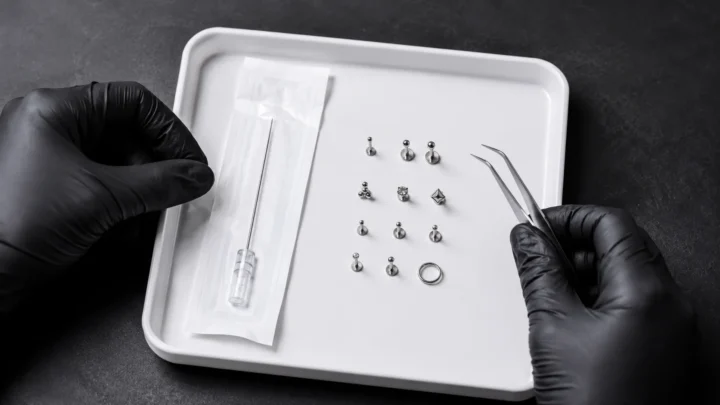
Any reputable studio in Saigon should be using single-use, pre-sterilised hollow needles for every piercing — opened fresh from sealed packaging in front of you. If a studio uses a gun, especially for cartilage placements, walk out. Guns cannot be fully sterilised, and the blunt force they use on harder tissue increases the risk of scarring and long-term complications.
According to the World Health Organization’s guidelines on safe medical procedures, reuse of piercing equipment without proper sterilisation is a documented risk factor for bloodborne infection transmission. Single-use equipment eliminates this risk entirely.
Implant-Grade Starting Jewellery
The jewellery used for a fresh piercing matters more than most people realise. Cheap mystery-metal jewellery — even if it looks fine — can cause allergic reactions, slow healing, and in some cases, prevent the piercing from healing at all.
Look for studios that use implant-grade titanium (ASTM F136) or implant-grade steel (ASTM F138) for new piercings. These are the materials recommended by professional piercing associations because they are biocompatible, hypoallergenic, and polished to a smooth finish that does not disrupt tissue healing.
At Bánh Mì Piercing, all starting jewellery is implant-grade. We do not compromise on this, regardless of which placement or price point you choose.
Visible Cleanliness and Setup
When you walk into a piercing studio in Ho Chi Minh City, look around before you sit down. Is the space clean? Does the piercer wash their hands and put on fresh gloves in front of you? Is the jewellery stored in sealed packaging? Is there an autoclave visible, or signage about sterilisation processes?
A professional studio is proud of its hygiene standards and will be happy to answer your questions about them. If a studio is evasive about its sterilisation process, that’s your signal to find somewhere else.
Anatomy Check and Honest Consultation
A good piercer will look at your ear before agreeing to the placement you’ve asked for. Not every placement works on every ear. Factors like cartilage thickness, skin folds, and the depth of certain features affect whether a daith, forward helix, or industrial is actually achievable on your anatomy.
If a studio agrees to every placement without looking at your ear first, be cautious. An honest anatomy check is a sign of a piercer who cares about the outcome, not just the booking.
What Happens During Your Ear Piercing Appointment
If you’ve never been pierced in a proper studio before — or if your only experience was a mall kiosk years ago — it’s worth knowing what a professional appointment actually looks like. There’s nothing to be anxious about. The whole process is calm, deliberate, and usually done within 20 to 30 minutes.
Step 1: Consultation and Placement Discussion
Before anything else, we talk. Which placement are you thinking? Do you have a reference photo? What does your existing ear look like? Are you building a curated look or just adding a single piece? This conversation shapes everything that follows — the position, the jewellery, and the aftercare plan.
If you haven’t decided yet, that’s fine. Bring an idea and we’ll help you refine it. Walk-ins are welcome at Bánh Mì Piercing, so you can come in, look at the portfolio, ask questions, and decide from there.
Step 2: Anatomy Check and Marking
The piercer examines your ear and marks the proposed placement with a surgical pen. You check the mark in a mirror and give the final approval before anything else happens. This step exists precisely so that you are completely comfortable with the position before the needle is picked up. If you want the mark moved — even slightly — say so. This is your piercing.
Step 3: The Piercing
The jewellery is opened fresh from sealed packaging. The needle is single-use. The area is cleaned. Then, in one smooth and deliberate motion, the piercing is done. Most clients describe lobe piercings as a quick sharp pinch. Cartilage placements feel slightly more intense — a stronger pressure — but the actual piercing is over in a second or two.
The jewellery is placed immediately through the fresh piercing and secured in place. The piercer checks the position and fit before you leave the chair.
Step 4: Aftercare Walkthrough
Before you leave, we walk through exactly what to do — and what to avoid — during the healing period. You’ll be given clear verbal guidance, and everything on this page also reflects what we tell our clients in studio. Don’t skip the aftercare briefing. How you care for the piercing in the first weeks has more impact on the outcome than almost anything else.
Healing Times and Aftercare for Ear Piercings in Vietnam
Vietnam’s climate — hot, humid, and dusty in Saigon — does not make healing impossible, but it does mean you need to be a little more deliberate with your aftercare than you might be at home in a cooler, drier climate. Here is what actually works.
Saline Rinse: Your Only Cleaning Product
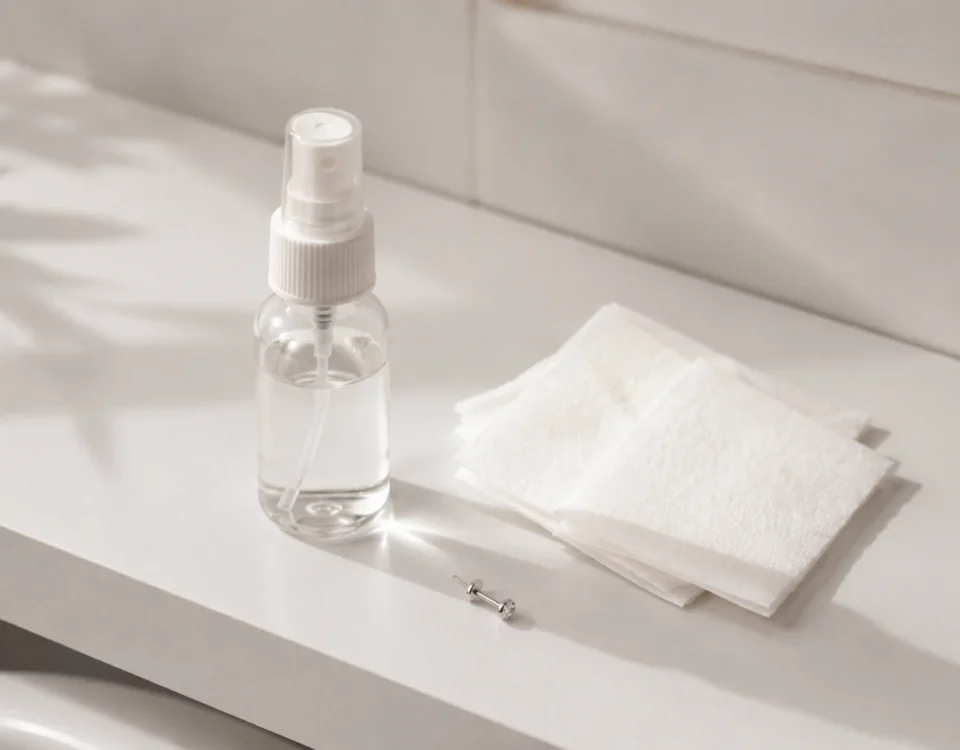
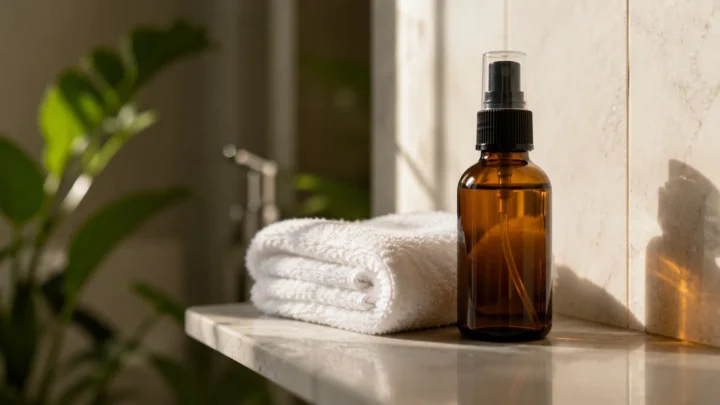
Use a sterile saline spray — sodium chloride 0.9% — to clean the piercing once or twice a day. Spray it on, let it sit briefly, and rinse with clean water. Let the piercing dry naturally or pat dry with a clean disposable paper tissue. Do not use cotton wool, which leaves fibres behind.
Avoid using anything else: no Dettol, no alcohol, no hydrogen peroxide, no soap directly on the piercing. These products are too harsh and disrupt the healing tissue rather than supporting it. Sterile saline is available at most Vietnamese pharmacies (look for “nước muối sinh lý”) or we can advise you on where to find it locally.
Avoid Pressure and Friction
This is especially relevant for helix and other cartilage placements. Do not sleep directly on a fresh ear piercing. Consider using a travel pillow with a hole, or sleeping on the opposite side. Avoid over-ear headphones, tight helmets, and anything that presses on the area during the first several months.
In the heat of Ho Chi Minh City, sweat can accumulate around piercings. Rinse after exercise or heavy sweating — not with soap, just with clean water — and make sure the area is fully dry afterward.
The Most Important Rule: Leave It Alone
Do not twist the jewellery. Do not rotate it. Do not touch it unless your hands are freshly washed and you’re cleaning it. The old advice about rotating jewellery to “prevent sticking” is outdated and actively harmful — it disrupts the healing fistula (the channel of skin forming around the jewellery) every single time.
Also: do not change the jewellery until the piercing is genuinely healed, regardless of how it feels. Piercings often feel healed long before they are. Changing jewellery too early is one of the leading causes of irritation bumps and prolonged healing times.
Downsizing: A Step Most People Miss
Initial jewellery is fitted longer than usual to accommodate the swelling that occurs in the first few weeks. Once the initial swelling has settled — typically 4 to 8 weeks in — the jewellery should be downsized to a shorter post that sits flush against the ear. This step prevents the longer bar from snagging on hair, towels, and clothing.
Come back to the studio for downsizing. It’s a quick appointment and makes a meaningful difference to how comfortably the piercing continues to heal. At Bánh Mì Piercing, we’re happy to see clients at any stage during the healing process.
When to Seek Help
Some redness, tenderness, and minor swelling in the first week or two is completely normal. What you should watch for — and contact the studio about — is spreading redness that extends well beyond the piercing site, heat and pain that gets worse rather than better after the first week, or unusual discharge that is green, yellow, or has a strong smell.
An irritation bump — a small raised area around the piercing — is common and usually resolves with consistent saline cleaning and removal of the source of irritation (usually pressure or snagging). It is not the same as an infection. If you’re unsure about what you’re seeing, photograph it and send it to us via WhatsApp or the contact form — we’re happy to help you figure out what’s going on before assuming the worst.
Frequently Asked Questions About Ear Piercing in Ho Chi Minh City
Is it safe to get an ear piercing in Vietnam?
Yes — provided you choose a studio that uses single-use sterile needles, implant-grade jewellery, and proper hygiene practices. The standard varies widely in Ho Chi Minh City, so doing a little research before you book makes a real difference. If a studio offers to pierce you with a gun, or cannot explain its sterilisation process, find somewhere else.
How much does an ear piercing cost in Ho Chi Minh City?
At Bánh Mì Piercing, ear piercing prices range from 200,000 VND for a basic lobe to 700,000 VND for more involved cartilage placements like the daith. All prices include a single-use needle, implant-grade starting jewellery, and an aftercare consultation. Prices at other Saigon studios vary significantly.
Can I get an ear piercing in Saigon as a tourist?
Absolutely. A significant portion of our clients at Bánh Mì Piercing are tourists and travellers passing through Ho Chi Minh City. If you’re visiting for a short time, a lobe piercing or a simple helix is a realistic option — just make sure you can follow aftercare guidelines while you’re still in Vietnam and that you have access to saline spray when you return home.
How long does a helix piercing take to heal?
A helix piercing typically takes 6 to 12 months to heal fully. It often feels significantly better within the first 2 to 3 months, but the internal tissue continues healing for much longer. Changing jewellery before full healing is one of the most common reasons helix piercings cause problems — follow your piercer’s guidance on timing.
Do ear piercings hurt?
Most people describe lobe piercings as a quick sharp pinch — over before you fully register it. Cartilage placements like the helix or daith involve more pressure, but the actual piercing motion takes one to two seconds. Pain tolerance varies from person to person, but eating beforehand, staying hydrated, and being in a calm headspace all genuinely affect the experience.
Can I walk in for an ear piercing at Bánh Mì Piercing?
Yes. Walk-ins are welcome at our studio in District 1, a 2-minute walk from Bến Thành Market. You can also book your session in advance via the website if you prefer a specific time slot.
Ready to Book Your Ear Piercing in Ho Chi Minh City?
Getting an ear piercing in Ho Chi Minh City is one of the most accessible and meaningful things you can do with an afternoon in Saigon. Whether you’re adding your first lobe, finally committing to that helix you’ve been thinking about, or starting to plan a full curated ear — the city has options. And now you know what to look for when choosing where to do it.
At Bánh Mì Piercing, we focus on three things: precise placement, implant-grade jewellery, and honest aftercare guidance. We take the time to check your anatomy, talk through your options, and make sure you leave with something you’ll actually love — and that will heal the way it should.
Walk-ins are welcome, Monday to Sunday, 10:00–20:00. We’re on the 3rd floor of 36 Lê Lợi, District 1 — 2 minutes from Bến Thành Market.
Ready to get started? Book your ear piercing session here, or send us a message on WhatsApp at +84 868 93 97 51 with your placement idea and we’ll take it from there.
Also from Bánh Mì: Bánh Mì Tattoo Studio — custom tattoo artistry on the same floor, for when you’re ready to go one step further.