Ear Piercing in Ho Chi Minh City: Complete Studio Guide
June 15, 2026
Helix Piercing Ho Chi Minh City: 5 Things to Know
June 17, 2026
First Time Piercing in Saigon: Honest Advice from a Boutique Studio
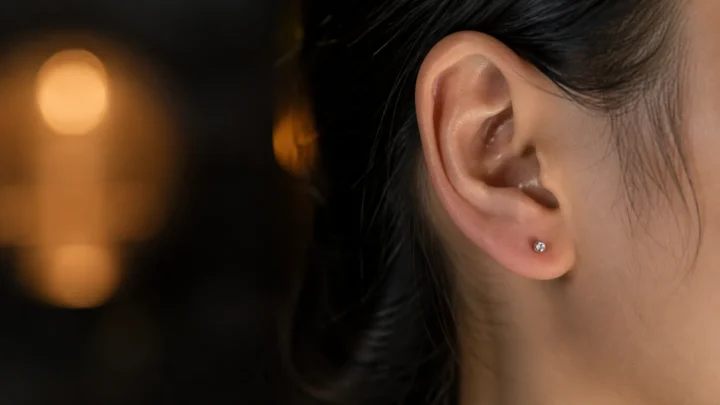
Getting your first time piercing in Saigon is easier than you might think — and far less scary than the internet makes it look. Whether you’ve been putting it off for years or you’re visiting Ho Chi Minh City and decided this is finally the moment, this guide walks you through everything: what to choose, how to prepare, what the actual appointment feels like, and how to take care of your piercing once you’re back out on the street.
We see first-timers every single day at Bánh Mì Piercing in District 1. This guide is exactly what we tell every new client before they sit down.
Table of Contents
- What Piercing Should You Get First?
- How to Prepare for Your First Piercing in Saigon
- What Your Appointment Actually Feels Like
- Does It Hurt? An Honest Answer
- Aftercare for First Timers: Keep It Simple
- Common Mistakes First-Time Piercing Clients Make
- Frequently Asked Questions
- Book Your First Piercing in Saigon
What Piercing Should You Get First?
This is the question we get most. The honest answer: start with something that heals reliably and fits your lifestyle. For most first-timers, that means a lobe piercing — and there are good reasons for that beyond it being the obvious choice.
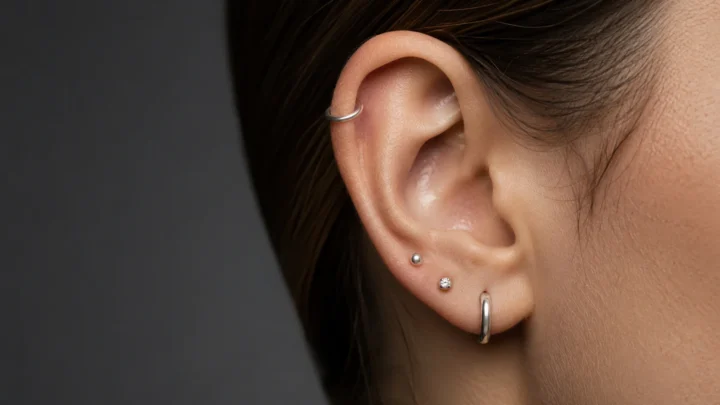
Why the Lobe Is the Smartest Starting Point
The lobe is soft tissue. It heals faster than cartilage, is more forgiving if you accidentally bump or sleep on it, and gives you the quickest feedback loop between getting pierced and seeing the healed result. A basic lobe at Bánh Mì Piercing heals in roughly 6 to 10 weeks with consistent aftercare — meaning if you’re a tourist in Vietnam for a month or more, you can get it done here and it’ll be well on its way before you leave.
A lobe also gives you something to build on. Once it’s healed, it becomes the anchor of a future curated ear stack — add an upper lobe next, then a helix, and you’re building something intentional rather than collecting placements at random.
Can You Get Cartilage for Your First Piercing?
Yes — plenty of our first-time clients go straight for a helix or a forward helix, and they heal beautifully when looked after properly. What we’d ask you to think about honestly: do you sleep on your side? Do you wear over-ear headphones regularly? Do you tend to forget about things like this and just hope they sort themselves out?
If the answer to any of those is yes, a lobe first gives you the experience of managing a healing piercing before committing to the 6 to 12 month timeline that cartilage requires. That’s not us putting you off — it’s us setting you up to actually love the result.
Not sure what’s right for your anatomy? Come in, show us your ear, and we’ll talk it through. There’s no obligation to book on the same visit.
How to Prepare for Your First Piercing in Saigon
A bit of preparation makes a real difference — not just to the experience, but to how well the piercing heals afterward. None of this is complicated.
Eat Before You Come
This is the single most underrated piece of advice we give. Eat a proper meal in the hour or two before your appointment. Low blood sugar is one of the most common reasons people feel lightheaded or dizzy after a piercing — not because the procedure was difficult, but because their body had nothing in reserve when it got a small adrenaline hit.
You don’t need to eat anything specific. Just don’t come in having skipped a meal or after only a coffee. A banh mi from the street corner downstairs counts.
Stay Hydrated
Saigon is hot. If you’ve been walking around District 1 in the heat, drink water before you come in. Hydration affects how your body responds to minor stress and how your tissue performs during healing. It costs nothing and makes a noticeable difference.
Avoid Alcohol Beforehand
We know some people think a drink beforehand will calm their nerves. It won’t — and it actually works against you. Alcohol thins the blood, which means you may bleed slightly more during the piercing, and it impairs the body’s initial healing response. Come in sober, come in fed, and you’ll be fine.
Wear the Right Clothing for the Placement
For ear piercings, this matters less than for body piercings — but if you’re getting something above the ear, avoid high-neck tops or anything with a tight hood that might snag the fresh piercing on the way off. A loose-fitting top or a button-down is ideal.
Bring a Photo Reference If You Have One
Not essential, but useful. If you’ve saved a photo of an ear stack you love on Instagram, bring it. It helps the piercer understand your long-term vision and place your first piercing in a position that leaves room for future additions — rather than somewhere that closes off your options later.
What Your First Piercing Appointment Actually Feels Like
If you’ve never been to a proper piercing studio before, you might be picturing something clinical and slightly intimidating. It isn’t. Here’s what a standard appointment at Bánh Mì Piercing looks like from the moment you walk in.
Step 1: You Walk In (or Book in Advance)
Walk-ins are welcome. You don’t need an appointment, though booking in advance means we can make sure a piercer is available for you at your preferred time. When you arrive, tell us what you’re thinking. If you’re not sure yet, that’s fine too — we’ll talk through the options and help you decide.
Step 2: Consultation and Anatomy Check
The piercer looks at your ear and talks through the placement options. We check that the anatomy supports what you’re asking for — not every placement works on every ear, and it’s better to find that out in a conversation than after the needle is in. For a simple lobe, this part takes about five minutes. For more complex cartilage placements, it might take a little longer.
This is also where you ask questions. How long will it take to heal? Can I swim after? What size jewellery will I start with? We’ve heard every question. There isn’t a stupid one.
Step 3: The Mark
The piercer marks the placement with a surgical pen. You look at it in a mirror. You say yes — or you ask for it to move, which is completely normal and happens regularly. The mark gets adjusted until you’re happy. Nothing happens until you approve it.
This step matters more than it sounds. A piercing placed even a millimetre in the wrong direction can look visually off once healed. Take a moment. Look at it properly. It’s your ear.
Step 4: The Piercing
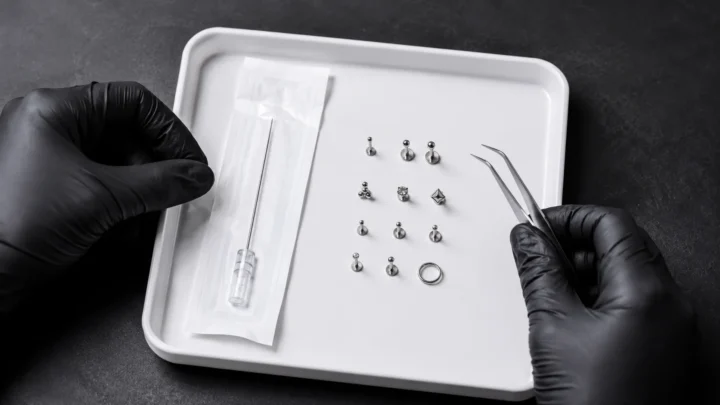
The piercer opens a sealed single-use needle in front of you, cleans the area, and you take a breath. The needle goes through in one smooth motion — it takes under two seconds. The jewellery follows immediately. The piercer checks the position and the fit. That’s it.
For a lobe, most people’s first reaction is surprise at how fast it was. For cartilage, there’s more pressure involved, but the actual motion is the same: deliberate, clean, done.
Step 5: Aftercare Walkthrough
Before you leave, the piercer walks you through the cleaning routine — what to use, how often, what to avoid. We recommend you listen to this even if you think you already know it, because the details matter and bad advice circulates widely online. The walkthrough takes about five minutes and it’s the part that most directly affects how your piercing heals.
Does It Hurt? An Honest Answer
Yes, briefly. We’re not going to tell you it’s completely painless — that wouldn’t be honest, and you’d know the moment it happened. But “hurt” is a relative term, and for most people the reality is much less than they imagined.
A lobe piercing is typically described as a sharp pinch that’s over before you finish registering it. The sensation lasts under two seconds. Cartilage piercings involve more pressure — the tissue is firmer, so the needle moves through it more slowly — but the feeling is still brief and predictable. It’s not a lingering pain; it’s a concentrated moment that ends cleanly.
What Actually Affects Pain Levels
Pain tolerance varies from person to person, but several practical factors genuinely influence the experience. Being well-fed and hydrated, as mentioned above, makes a measurable difference. Stress and anxiety raise your sensitivity, so coming in calm — or at least trying to be — helps. Breathing through the moment rather than bracing against it also reduces the perceived intensity.
According to research on pain perception, anticipatory anxiety consistently amplifies the experience of pain beyond the actual physical sensation. In plain terms: the fear of the piercing usually feels worse than the piercing itself. Most first-time clients at Bánh Mì Piercing say exactly this afterward.
What It Feels Like After
A lobe will typically feel tender and slightly warm for a day or two. A helix or other cartilage placement may feel sore for a week or more, particularly if accidentally bumped. Neither of these is cause for alarm — it’s the body doing exactly what it should. The key is not to interfere: don’t poke at it, don’t sleep on it, don’t try to rotate the jewellery.
Aftercare for First Timers: Keep It Simple
The most important thing to understand about aftercare is this: your job is to keep the piercing clean and leave it alone. Everything else is secondary.
Use Saline. Nothing Else.
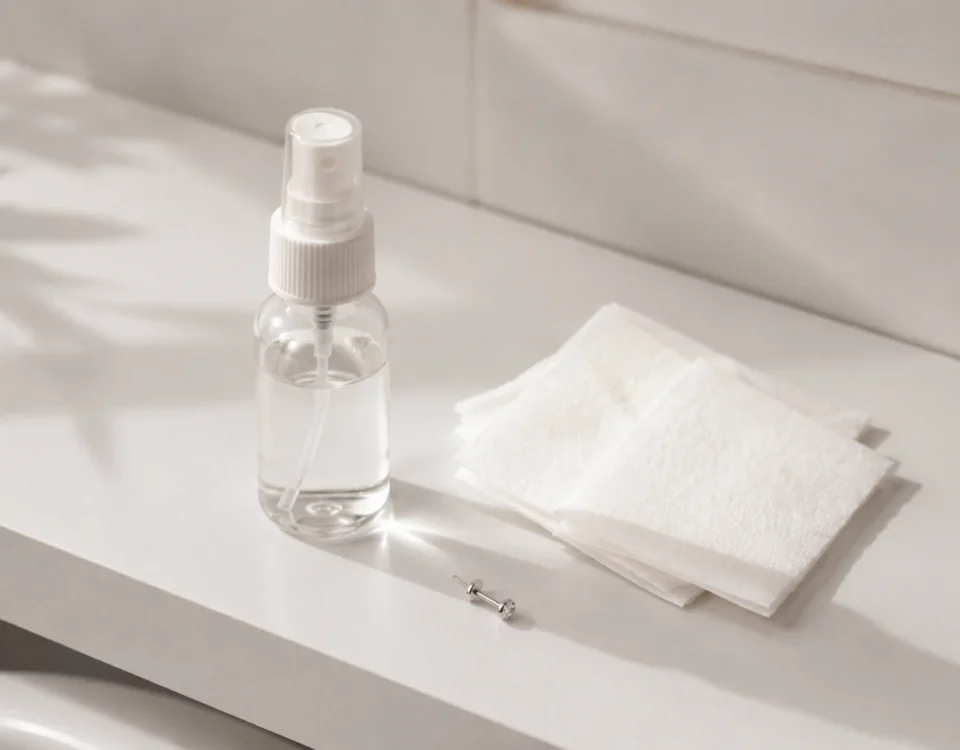
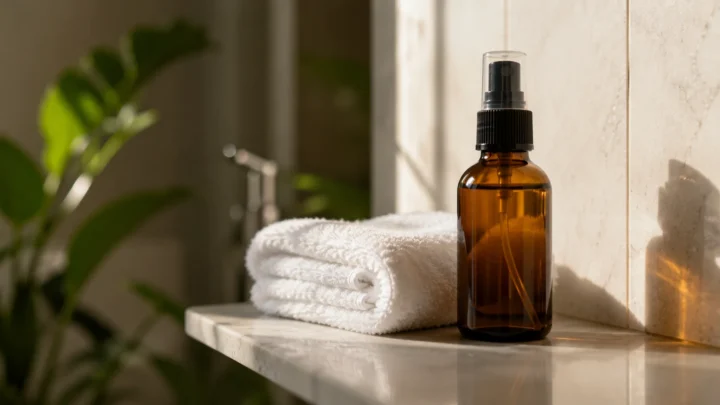
Sterile saline solution — sodium chloride 0.9%, available at any Vietnamese pharmacy as “nước muối sinh lý” — is the only product you need to clean a fresh piercing. Spray it on once or twice a day, let it sit briefly, then rinse with clean water and pat dry with a disposable tissue. That’s the entire routine.
Do not use soap, alcohol, Betadine, or hydrogen peroxide on a healing piercing. These products damage the forming tissue and slow healing. They feel like they’re doing something, but they’re actually working against you. Saline cleans without disrupting; that’s the point.
Don’t Touch It Unless You’re Cleaning It
This is harder than it sounds. Fresh piercings feel interesting — there’s a temptation to check them, adjust them, show them to people. Resist it. Every time you touch the piercing without freshly washed hands, you’re introducing bacteria to an open healing wound. Every time you twist or move the jewellery, you’re disrupting the fistula forming around it.
Leave it alone. Clean it as directed. Let your body do the rest.
Think About How You Sleep
For lobe piercings, sleeping habits matter a little. For cartilage, they matter a lot. Pressure on a healing cartilage piercing is one of the most common causes of irritation bumps — small raised areas that form when the tissue is repeatedly disturbed. If you sleep on the side of your piercing, consider getting a travel neck pillow with a hole, or switching to the other side.
What to Watch For
Some redness, tenderness, and minor swelling in the first week or two is completely normal — that’s the body’s standard healing response. What to watch for instead: spreading redness that moves beyond the piercing site, increasing pain after the first week rather than decreasing, or unusual discharge that is thick and coloured.
An irritation bump around the piercing is common and usually resolves with consistent care. It is not the same as an infection. If you’re unsure about anything you’re seeing, photograph it and send it to us via WhatsApp — we’d rather answer a question that turns out to be nothing than have you worry alone.
Common Mistakes First-Time Piercing Clients Make
We’ve seen every mistake there is. These are the ones that come up most often — and all of them are easy to avoid once you know.
Changing the Jewellery Too Early
This is the most common one. The piercing feels fine after a few weeks, so the client assumes it’s healed and swaps in their own earring. Then the problems start. A piercing can feel completely healed on the surface while still being unfinished internally. The fistula — the channel of healed skin forming around the jewellery — takes much longer to mature than it takes for the surface tenderness to fade.
Wait until we tell you it’s ready for a change, or until you’ve passed the recommended healing window. For a lobe, that’s a minimum of 6 to 8 weeks. For cartilage, it’s several months. When in doubt, come back in and we’ll check it for you.
Over-Cleaning
More cleaning does not mean faster healing. Cleaning a fresh piercing three or four times a day with saline can actually irritate the tissue by not giving it time to rest. Once or twice a day is sufficient. The goal is to remove buildup and keep the area free of bacteria — not to sterilise it hourly.
Using the Wrong Products
Social media is full of home remedies for piercings — tea tree oil, coconut oil, chamomile compresses, diluted alcohol, and more. Most of these cause more harm than they solve. Tea tree oil in particular is commonly recommended online and is directly associated with contact dermatitis and delayed healing in piercing tissue. Stick to sterile saline. It works because it mimics the body’s own environment.
Going to a Gun Studio for a “Touch-Up”
If you experience any issues with a needle-pierced ear and then visit a market stall or salon that uses a gun, you risk undoing the progress your body has made. A gun cannot be sterilised between clients, and the blunt force it uses on tissue is particularly damaging when that tissue is already mid-heal. If you have a concern, come back to us — or go to a reputable needle studio.
Frequently Asked Questions for First-Time Piercing Clients in Saigon
Is Saigon a good place to get your first piercing?
Yes — if you choose the right studio. Ho Chi Minh City has excellent boutique piercing studios alongside less reputable options. The key is to look for single-use needles, implant-grade jewellery, and a piercer who does a proper anatomy check before agreeing to any placement. Bánh Mì Piercing meets all three criteria, and we see first-timers every day.
What is the best first piercing to get?
For most people, a basic lobe piercing is the best starting point. It heals the fastest (6–10 weeks), is the most forgiving in terms of lifestyle adjustments, and gives you a solid foundation for future placements. If your heart is set on cartilage, a helix is a popular and manageable second choice — just go in understanding the longer healing timeline.
How do I know if a piercing studio in Saigon is safe?
The three things to check: Do they use single-use sterile needles (not guns)? Do they use implant-grade jewellery? Can they explain their sterilisation process? A professional studio will be happy to answer these questions before you commit. If they’re evasive, find somewhere else.
Can tourists get pierced in Ho Chi Minh City?
Absolutely. Tourists make up a significant portion of first-time piercing clients at Bánh Mì Piercing. If you’re only in Saigon for a short time, a lobe is the most practical choice — it begins healing quickly and the aftercare routine is easy to maintain while travelling. We’ll give you all the guidance you need for looking after it on the road.
How long will I be in the studio for my first piercing?
Including consultation, marking, piercing, and aftercare walkthrough, most first-time appointments take between 20 and 40 minutes. More complex placements or multiple piercings in one session will take longer. Walk-in appointments are welcome, though booking in advance ensures you get your preferred time slot.
What if I’m nervous?
That’s completely normal. Tell your piercer — we’re used to it and we’ll walk you through each step before it happens so nothing catches you off guard. The nervousness is always worst in the waiting. The piercing itself is over before most people expect it.
Book Your First Piercing in Saigon
Getting your first time piercing in Saigon doesn’t need to be a big production. Eat something beforehand, find a studio that uses proper equipment, ask your questions, approve the mark, and breathe. That’s the whole thing.
At Bánh Mì Piercing in District 1, we’ve guided hundreds of first-timers through exactly this process — and the most common thing they say afterward is that they wish they’d done it sooner. Come in, see the space, and ask us anything. There’s no pressure to book on the spot.
We’re open Monday to Sunday, 10:00–20:00. Third floor, 36 Lê Lợi, District 1 — a 2-minute walk from Bến Thành Market.
Reserve your session here, or message us directly on WhatsApp at +84 868 93 97 51 with any questions before you come in.
Want to learn more before you decide? Read our complete guide to ear piercing in Ho Chi Minh City — covering every placement type, pricing, and what to expect from the healing process.